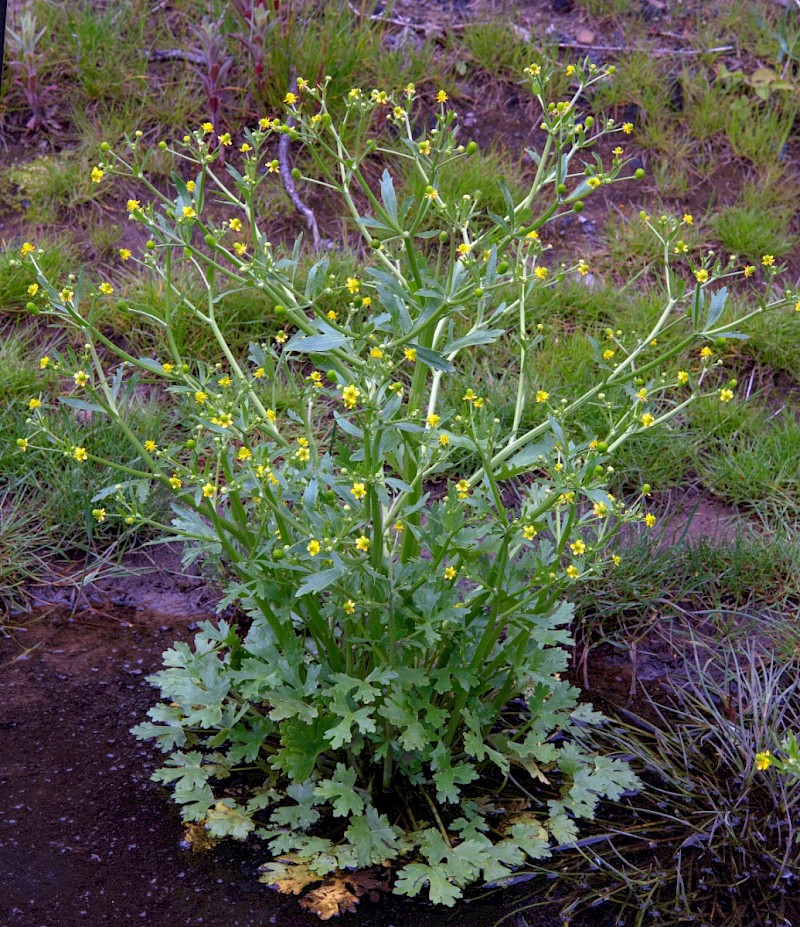
Ranunculus sceleratus - © Charles Hipkin
Linnaeus
A winter or summer annual buttercup which is a pioneer of wet muddy soils at the edges of water bodies or in places poached by sheep, horses or cattle. Unlike other buttercup species it is quite salt tolerant and is often found growing in brackish areas such as grazing marshes that are flooded occasionally by tidal water and in the upper parts of grazed salt marshes. It can be quite ephemeral in some of its locations but it produces lots of seed, much of which lies dormant and builds up into a very effective seed bank in the soil. It is a pale green plant with deeply lobed basal leaves, somewhat like those of celery, and small yellow flowers which have reflexed sepals. Bees and flies visit the flowers for the nectar which is produced freely. It is very common in much of lowland southern Britain but it is rather coastal in Wales. In West Glamorgan it is frequent in brackish habitats along the coast and in the tidal Neath grazing marsh. It also occurs occasionally along major roads that are treated with salt in winter. Most parts of the plant contain the toxic cardiac glycoside ranunculin, which is present in many other buttercup species and which breaks down to protanemonin in damaged or crushed leaves or when chewed (see description of Ranunculus acris).


Key: