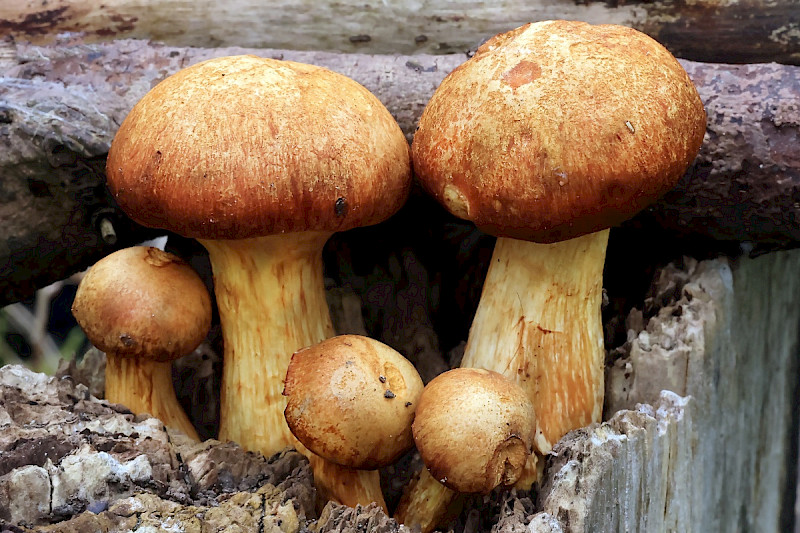
Gymnopilus junonius - © Charles Hipkin
(Fr.) P.D. Orton
An aptly named species which produces clusters of large, yellowish-orange fruiting bodies on the decaying wood of deciduous trees, usually at the base of the tree or stump. The cap, which can have a smooth or a scaly surface, is dome-shaped at first with the gills covered by a veil which breaks away to form a distinctive ring on the stem as it expands to reveal the yellow or rusty brown gills. It is a common fungus in Britain and there have been several records of it in West Glamorgan, particularly from deciduous woodlands in Gower. The fruiting bodies conatin a number of interesting toxic compounds, although the exact composition may depend on geographical location and growing conditions. At the very least ingestion causes severe gastrointestinal upset but there are also neurotoxic effects.. It has earned the name 'Laughing Gym" because some specimens contain substances which interact with the nervous system to provoke involuntary bouts of laughter after ingestion. One of these substances, gymnopilin, is a primary meurotoxin which affects neurotransmission. Sesquiterpenes that are present also cause cellular toxicity. Psilocybin, the active, hallucinogenic ingredient found in many 'magic mushrooms', has been found in fruiting bodies from some Asian populations, but it doesn't seem to occur in specimens found in Britain and Europe.


Key: