Dry Stone Walls and Field Boundaries - © Charles Hipkin
The biodiversity of boundary features on enclosed farmland varies greatly with the intensity of management and the amount of agricultural improvement that has taken place. On lowland farms in particular, as farming practices have evolved since the end of the Second World War, many field boundaries, like hedges, have been removed and the biodiversity of field margins and corners of improved pasture are often disappointing. However, plant diversity along the margins and in the corners of old arable fields is much better and this is well illustrated in the ancient field system of the Vile in Rhossili. Also, where fields are cut for hay, margins and corners are usually more diverse in the flora of their margins, especially in old fields where traditional hay cutting practices have been maintained over long periods of time. Where hedges have survived on farms a typical hedgerow flora may be present but often this is patchy and badly managed. However, hedgebanks with wet ditches survive on some farms and these can support diverse floras unless they are polluted with agrochemicals. Upland farms that have escaped intensive agricultural improvements often suppport marshy fiields whose boundaries are more diverse.
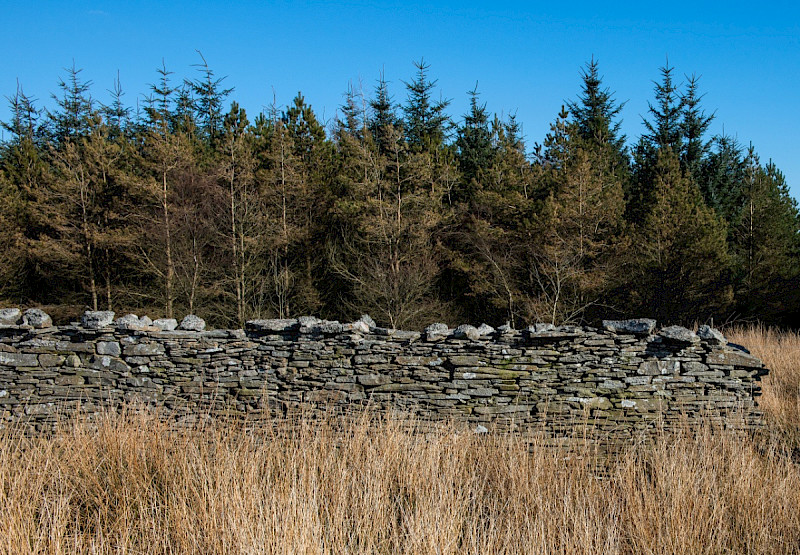
Dry stone walls were once common boundary features of the Gower landscape and once defined the upper limit of enclosure in the uplands of the South Wales Coalfield. However, as the art and practice of dry stone walling has dwindled, walls have not been maintained and many have disappeared or collapsed. A renewed interest in dry stone walling in West Glamorgan is helping to reverse this trend, e.g. the recently renovated dry stone wall in Mewslade, Gower. Other important dry stone walls in Gower include those in the Rhossili area such as on the Vile. Dry stone walls supports a large diversity of saxicolous plants and lichens whose composition depends, largely, on the geology of the stone. Gower walls are mostly built from limestone and support a rich diversity of calcicole plants, including uncommon species such as Lanceolate Spleenwort (Asplenium obovatum) and lots of crustose lichens. Dry stone walls in the uplands of Neath Port Talbot are mostly built of more acidic Pennant Sandstone rock often with Navelwort (Umbilicus rupestris), lots of bryophytes including Woolly Fringe-moss (Racomitrium lanuginosum) and a diversity of foliose and crustose lichens especially species such as Salted Shield (Parmelia saxatilis), Map Lichen (Rhizocarpon geographicum) and porpidia lichens like Porpidia cinereoatra. Extensive networks of dry stone wall, in various states of dis-repair, are still to be found in conifer plantations, historic remnants of the old farms that dominated the upland, pre-plantation landscape of Neath Port Talbot and often revealed when coupes are clear-felled (see photo).


