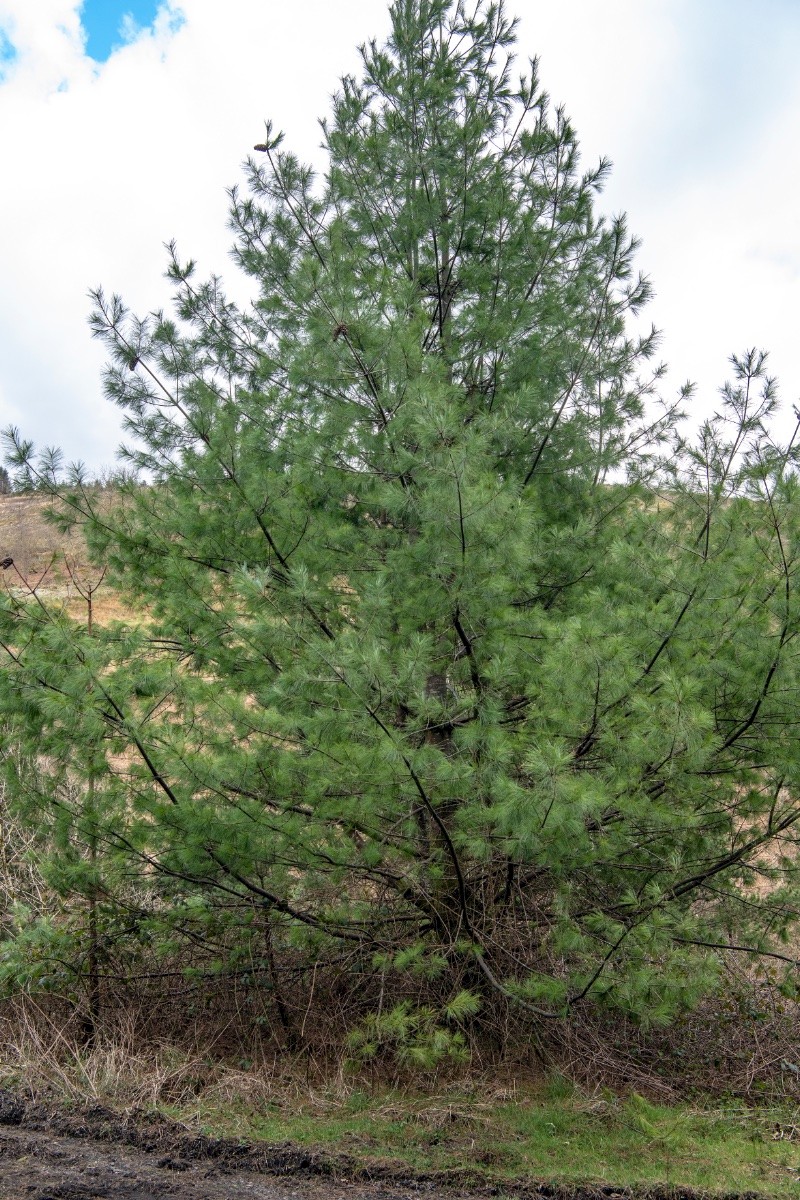
Pinus strobus - © Charles Hipkin
Linnaeus
Weymouth Pine, also known as Eastern White-pine, is a five-needle pine which is native to northeastern North America from Newfoundland to the southern Appalachian mountains. growing up to 67m (220 feet) tall. It was named after Lord George Weymouth who discovered it in Maine and it and was introduced to Britain in 1705. It is a large tree when mature, with long needles up to 14cm long and long female cones that are 8-20cm long. It is similar to Macedonian Pine (Pinus peuce) and Bhutan Pine (Pinus wallichiana) but it has minute hairs at the base of short shoots (the small shoots that hold the needles). It is very susceptible to a blister-rust caused by the fungus Cronartium rubicola which kills older trees. Although it is widely planted in parks and large gardens it is not common. It is sometimes found in trial plantations in upland areas but it is not a significant tree in British forestry. Freshly harvested needles are used by some craft distilleries to make an infusion that is used in the production of pine-infused gins. There are no records of it as a naturalised species in West Glamorgan.
Planted


Key: